AI in Medicine: An Interview with Dr Valentin Biehal
A psychiatrist on AI in diagnostics, brain research and medical decision-making
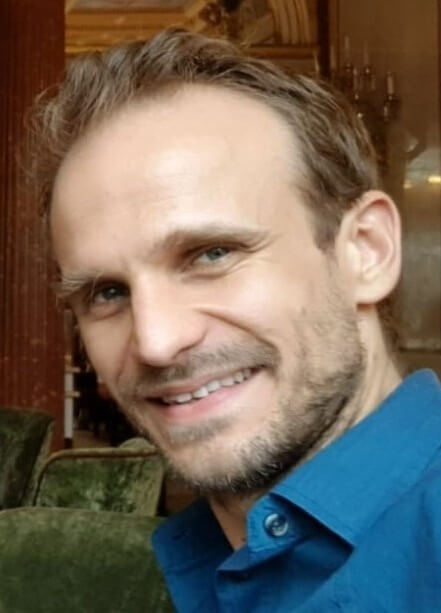
About Valentin Biehal
Valentin Biehal follows his passion: the healing and study of the human psyche — in his profession as a specialist in psychiatry and psychotherapeutic medicine (Dr med. 2015, psychotherapist with a focus on behavioural therapy 2021). Alongside the medical perspective, he is today broadening his horizon through a master’s degree in medical informatics (from the 2021/22 winter semester) and advocates for better resources for people with mental illness as a board member of the pro mente Wien association. Driven by his chronic curiosity and an anything-but-linear career path (business studies: Mag. 2007, psychology: B.A. 2012, professional work in a non-medical field and various stays abroad), he now conducts research at interdisciplinary intersections — such as the subject of this interview — and is committed to sharing knowledge and to ethical scrutiny.
Interview on 1 August 2023, Vienna
Melanie Gau, SEQIS: What is your connection to AI and your field of application, and how did you come across the topic?
Dr Valentin Biehal: I have been interested in computer science for a long time, and after finishing school it was in fact my first (though at the time unsuccessful) choice of studies. The advances of recent years in this field — which come with ever more possibilities in examining the brain (imaging, signal processing, etc.) but above all in modelling neural processes and functions — have greatly renewed my interest in this area, especially since I now see a chance here to enrich the fields of psychiatry and brain research with the possibilities of computer science.
Melanie Gau, SEQIS: What role do IT, and AI in particular, already play in medicine and clinical practice?
Dr Valentin Biehal: Computer-aided processing and analysis of “biosignals” have long been important topics. For example, certain parameters are already calculated in real time by ECG recording devices and shown on the findings. These are still comparatively simple tasks, and yet the results are often imprecise. In the field of radiography (e.g. X-ray and CT scans), automatic image recognition (pattern matching) using AI has now become so good that it can solve some tasks better than radiologists.
For more complex questions, such as evaluating EEG data, it is already much harder to arrive at usable results. But here too there have already been some successes, such as a fairly robust determination of sleep phases by AI. This example illustrates well, however, where one of the challenges of automatic analysis lies: even the experts disagree on some special cases of sleep phases, and so it is problematic to validate the computer-generated results! One could therefore consider whether a self-learning (deep-learning) approach is a better way to go, and whether such an approach might even lead to a different, more meaningful classification of phases, since the currently established one is apparently not so clear-cut. But how would these results then be sensibly validated?
Another area, which has less to do with direct application and more with fundamental research, is bioinformatics and — in brain research above all — the sub-field of computational neuroscience. Here, with the help of simulations, one looks for mathematical models that could explain certain areas or functions of the nervous system. This can close the gap between basic neurobiology at the micro level (that is, for example, the behaviour of nerve cells or their inner workings) and psychology, which by its nature can only assess or study the behaviour of the people examined.
Whether AI will soon be able to replace the physician’s decision, however, is — not least because of the question of liability in the case of misdiagnoses — not so easy to answer.
Melanie Gau, SEQIS: Do you see the introduction of AI into the medical field as something positive, or are you rather critical of it?
Dr Valentin Biehal: I think this can (and will) lead to many improvements and, above all, to relief in medicine. There is probably no way around it either. The shortage of workers in the healthcare sector, which is becoming ever more drastic today, will also make it urgently necessary to find other ways of continuing to ensure patient care. AI-supported systems could provide decisive support in many areas here, to ease tasks for the existing staff or take them over entirely.
Melanie Gau, SEQIS: But can this not also bring dangers? For instance, because the AI cannot sufficiently take ethical aspects into account, or because it mostly learns from existing, human-generated data that can have a strong bias (e.g. portraying minorities, marginalised groups, etc. more negatively)?
Dr Valentin Biehal: Those are certainly dangers to be taken seriously, and great attention should be paid to them in any implementation! Of course, the question here is to what extent profit-oriented companies can be brought to actually do so. Good state regulation and international cooperation are certainly needed here. But how far this is even possible will surely be an important question in the coming years.
Conversely, however, AI can offer the chance that decisions (for example in the medical field or in traffic) are made more objectively and therefore in a more ethically comprehensible way, since — ideally — they no longer depend on the competence, convictions and mood of a human being. So while there is (rightly) much media discussion about how a self-driving car should “decide” in a dangerous situation, it is easily forgotten in this context that it can in any case react faster than a human driver, especially when the latter is, for example, overtired, distracted or even intoxicated.
The programme for determining sleep phases mentioned above also suggests that AI might make better decisions than human experts.
What will surely be exciting in the future, however, is how far (or perhaps rather how quickly) large language models (cf. ChatGPT) will find their way into medicine. This could then also become interesting for specialist fields where image recognition is of little help, but where the conversation plays a central role, such as in psychiatry. Initial studies are already under way here. Here, of course, human bias in the underlying data may play a major role, and it will be a great challenge to counter it.
Originally published at SEQIS Blog